How Many Worms Do I Need to Start a Worm Bin?
The most common answer you will find online is “one pound.” That is not wrong, but it leaves out everything useful about why one pound is the recommendation, when more makes sense, when less is fine, and how to think about scaling up as your population grows.
Here is the full picture.
The Standard Starting Quantity
One pound of red wigglers, which is approximately 800 to 1,000 individual worms, is the standard starting quantity for a household worm bin because it represents the minimum population needed to process a useful amount of food while being small enough that the worms can establish themselves without outrunning the food supply.
At one pound, red wigglers can process roughly three to four pounds of food per week under ideal conditions. For a household of one to four people generating typical kitchen scraps, this matches the waste stream reasonably well.
More importantly, red wigglers will grow their population to match the available food and space over time. A bin started with one pound that is fed consistently and maintained correctly will have two pounds of worms within three months, four pounds within six months. The population self-regulates. You do not need to start with the full population you eventually want to have.
Calculating What You Actually Need
A more useful way to think about starting quantity is to match your starting worm weight to your expected weekly food volume.
Red wigglers process approximately half their body weight in food per day. One pound of worms therefore processes about half a pound of food daily, or three to four pounds per week. If your household generates significantly more or less than that, adjust your starting quantity accordingly.
Household of one or two people generating about two pounds of food scraps per week: half a pound of worms is sufficient. The population will grow to match the available food.
Household of four to six people generating six to eight pounds of food scraps per week: start with one and a half to two pounds of worms to avoid the problem of food building up faster than the worms can process it in the early months.
Homestead with chickens, a garden, and a significant organic waste stream: consider starting with two to three pounds and running a larger bin or multiple bins.
What Happens If You Start with Too Few Worms
Starting with fewer worms than your food stream requires is not a disaster. The main effect is that uneaten food accumulates while the population grows to match it. This can cause odor problems if food builds up significantly and begins decomposing anaerobically.
The practical solution is to reduce feeding volume for the first two to three months while the population grows. Feed only what the current population can process in three to four days. As you see food disappearing faster, you can gradually increase feeding frequency and volume.
Starting with too few worms and feeding at the correct rate for that population is better than starting with too few worms and overfeeding.
What Happens If You Start with Too Many Worms
Starting with more worms than the food supply can support causes the population to decline toward the carrying capacity of the bin. This is not harmful in a serious way, but it means you paid for worms you did not need and they will die down to the level the system can support anyway.
In practice, starting with slightly more worms than you need speeds up the time to a fully operational, high-production bin. Starting with a two-pound population means hitting full production capacity faster than starting with one pound. Whether the cost difference is worth it depends on your goals.
Bin Size Matters As Much As Worm Count
A pound of worms in a small bin (under 10 gallons) will be crowded enough to limit reproduction and may have insufficient bedding depth to maintain temperature stability. A pound of worms in a large bin (20+ gallons) with abundant bedding has more room to grow but will take longer to condition the full volume of bedding into castings.
The appropriate bin volume for a starting population is 8 to 15 gallons per pound of worms. A standard 14-gallon storage tote, one of the most common DIY worm bin setups, works well for a one-pound starting population.
Where to Buy Your Starting Worms
Buying from a reputable supplier matters more than most beginners realize. Worms that arrive stressed, too warm, too cold, or in poor condition can have a difficult first week and give you a misleading picture of how a healthy worm bin should behave.
Look for suppliers who ship in breathable bedding material, not just damp newspaper, and who provide a live arrival guarantee. Order in spring or fall when shipping temperatures are moderate. Summer shipping to warm destinations and winter shipping to cold destinations both risk temperature damage.
Uncle Jim’s Worm Farm is the most widely purchased source on Amazon and has a consistent track record.
Red wigglers from The Squirm Firm is another well-regarded option with good packaging.
If you are buying locally, bait shops often sell red wigglers under the name “red worms” or “manure worms.” Ask specifically for Eisenia fetida to confirm the species.
How to Count Worms Without Counting Worms
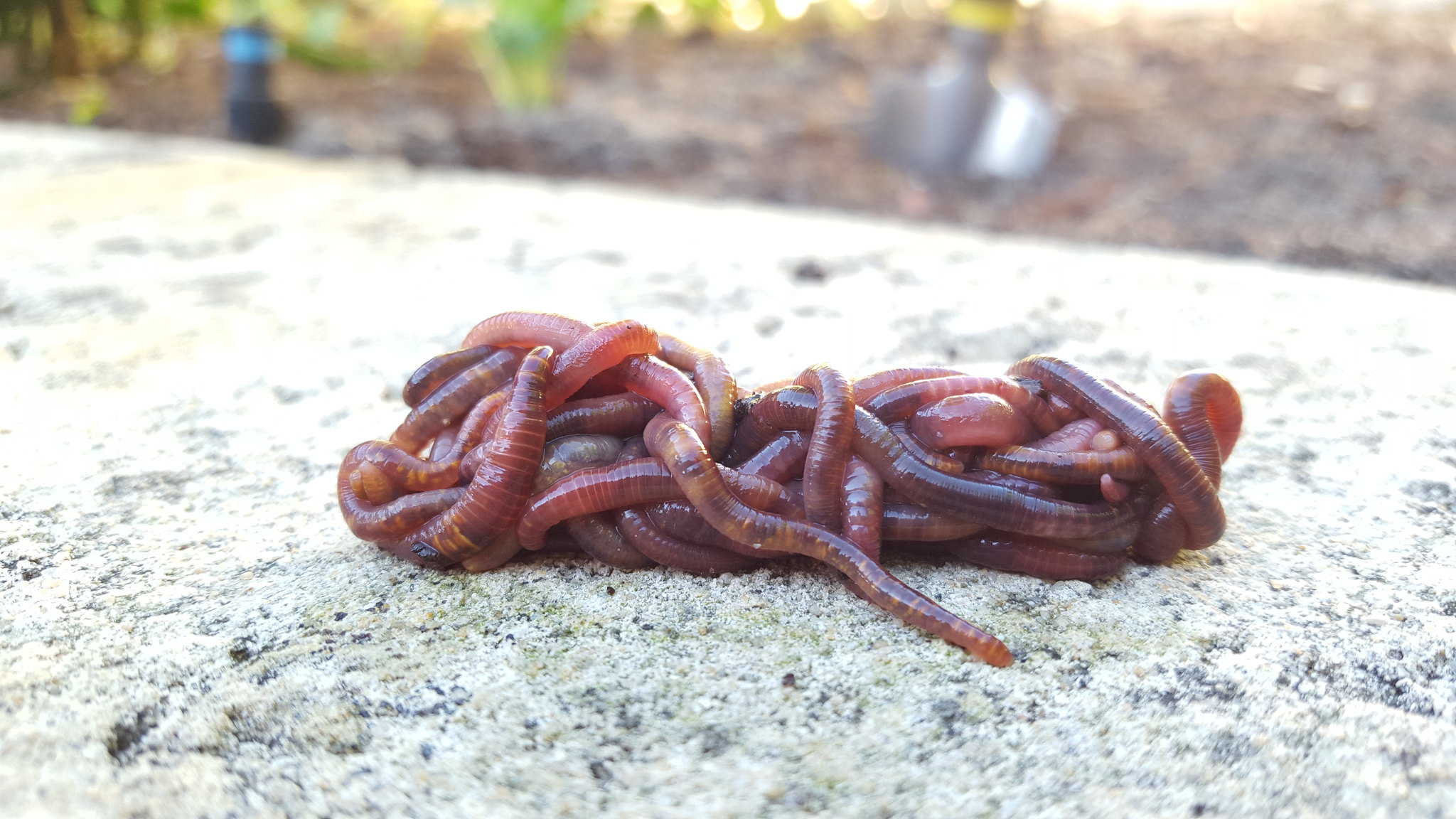
One pound of red wigglers is the measurement worm suppliers use because weighing is faster than counting a thousand individual worms. When worms arrive, they will be coiled together and hard to count accurately.
A practical check on whether you received approximately what you ordered: a half-pound of red wigglers fills roughly a quart container when loosely packed. A full pound fills roughly two quarts loosely, or a bit more than a quart when they are coiled together in shipping bedding.
If you want to estimate your existing population before reordering, weigh a known volume of worm-dense material from an established bin, pick out the worms, and weigh them. Extrapolate across the full bin. This is approximate but gives you a working estimate.
Starting Population Summary
| Household size | Weekly food volume | Starting worms |
|---|---|---|
| 1-2 people | 1 to 3 pounds | 0.5 to 1 pound |
| 3-4 people | 3 to 5 pounds | 1 to 1.5 pounds |
| 4-6 people | 5 to 8 pounds | 1.5 to 2 pounds |
| Homestead with chickens and garden | 8 to 15 pounds | 2 to 3 pounds |
| Small-scale worm farming | 15+ pounds | 5 pounds minimum |
Start at the lower end of these ranges if you are new to vermicomposting and not yet sure how consistently you will manage the bin. The population will grow. Start at the higher end if you want to reach full capacity quickly or if you are beginning with a clear commitment to consistent management.