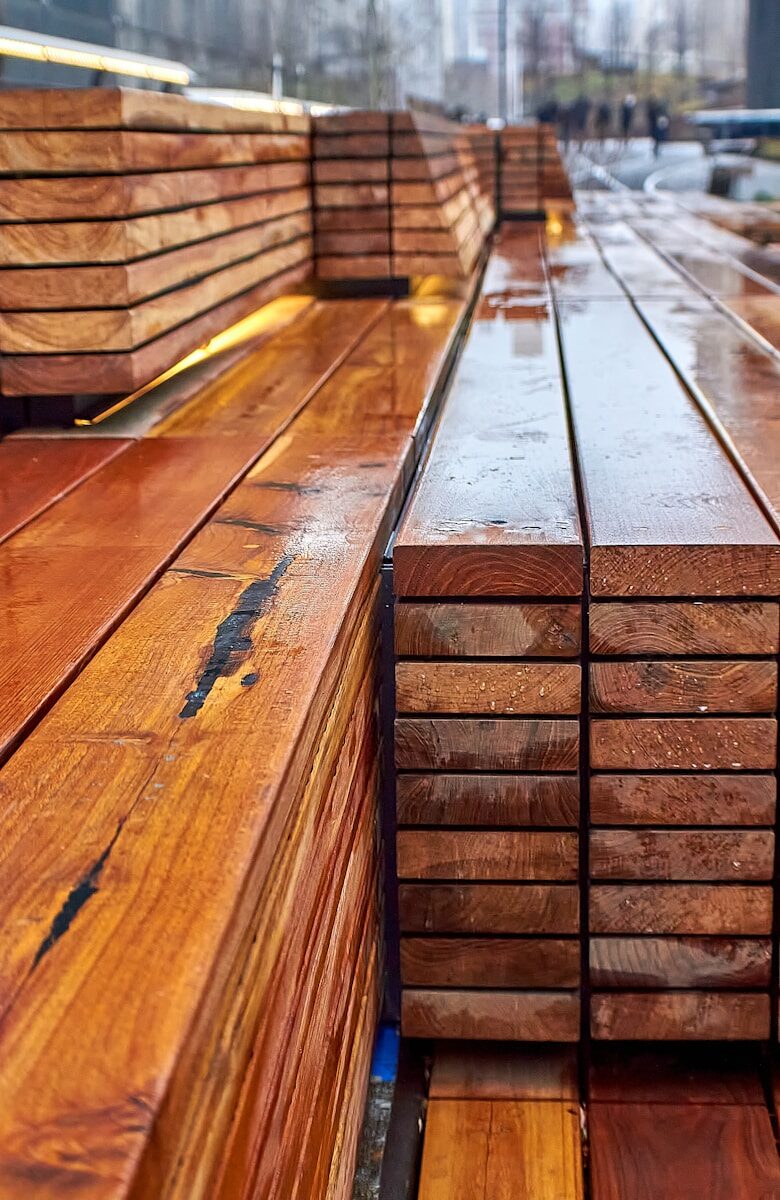
Pressure Treated vs Cedar Lumber: Which to Use for Outdoor Projects
The two most common lumber choices for outdoor homestead projects are pressure treated and cedar, and they are frequently confused for interchangeable options when they are not. Each one is right for specific applications and wrong for others. Using the wrong lumber for an outdoor project does not always cause immediate failure, but it usually causes premature failure, meaning a structure that lasts 5 years instead of 20.
Here is exactly when to use each one, what the labels on pressure treated lumber mean, and the safety question around PT lumber in vegetable gardens.
The Core Difference
Pressure treated lumber (PT) is softwood dimensional lumber (typically southern yellow pine) that has been impregnated with chemical preservatives under pressure. The preservatives penetrate the wood fibers and protect against rot, fungal decay, and insect damage even when the wood is in direct contact with soil and moisture. PT lumber is the appropriate choice for any application where wood contacts or is near the ground.
Cedar contains natural oils (primarily thujaplicins) that give it inherent resistance to rot and insect damage without chemical treatment. It does not last as long as PT lumber in direct ground contact, but it performs well in above-ground outdoor applications, is lighter and easier to work with, and is preferred for visible, touchable surfaces in food gardens where chemical leaching is a concern.
When to Use Pressure Treated Lumber
Use pressure treated lumber when:
The wood is in contact with soil. Fence posts, deck posts, raised bed frames sitting on soil, pergola posts, any framing that sits on or in the ground. Wood without chemical treatment rots quickly in soil contact regardless of species.
The wood will be consistently wet. Joists beneath a deck or porch that collect moisture from above, structural members near a water feature, or framing that will be regularly saturated.
Ground-level structural framing. The bottom plate of a wall framed on a concrete slab or near grade should be PT to withstand the moisture vapor that concrete transmits.
Decking in high-moisture climates. In the Pacific Northwest, the Southeast, or any high-humidity environment, PT decking outperforms cedar in longevity at lower cost.
When to Use Cedar
Use cedar when:
The wood is above ground and not in constant moisture. Raised bed siding above the soil line, fence boards, exterior cladding on a coop or shed, garden furniture, trellises and garden structures.
Visible and touchable surfaces in food gardens. Cedar does not leach chemical preservatives into soil, which makes it the preferred choice for raised vegetable bed construction by gardeners who want to minimize any risk of chemical contact with their crops.
Anywhere appearance matters. Cedar’s color, grain, and aging characteristics (it weathers to a beautiful silver-gray) are distinctly more attractive than the greenish tint and rough grain of standard PT lumber. For garden furniture and visible outdoor structures, cedar looks significantly better.
Projects where light weight matters. Cedar is substantially lighter than PT lumber. A 12-foot 2×6 cedar board can be moved and positioned by one person. PT lumber of the same dimensions is noticeably heavier due to the water-based preservative retained in the wood during treatment.
Understanding PT Lumber Labels
Pressure treated lumber is labeled with codes that identify the type of treatment and the appropriate application. These labels matter for choosing the right PT for your specific use.
Treatment type:
AC Q (Alkaline Copper Quaternary) and CA (Copper Azole) are the current standard PT treatments for residential use. They replaced CCA (Chromated Copper Arsenate), which contained arsenic and was phased out for residential use in 2004. Current ACQ and CA treatments use copper-based preservatives that are significantly less toxic than CCA.
Retention level and use category:
The label on PT lumber includes a use category code that specifies what the lumber is rated for.
UC3B: Above ground, general exterior use. Protected from the weather to some degree. UC4A: Ground contact, general use. Fence posts, deck posts, most structural ground-contact applications. UC4B: Ground contact, critical structures. Higher retention for demanding applications. UC4C: Ground contact in extremely aggressive environments (freshwater use, high-moisture soils). UC5A/B/C: Marine use. For applications in or near saltwater.
For most homestead applications, UC4A or UC4B is the appropriate rating for any ground-contact structural use.
Is Pressure Treated Lumber Safe for Vegetable Gardens?
This is the question most homestead gardeners ask, and the honest answer is nuanced.
Current ACQ and CA treated lumber releases copper compounds into adjacent soil. Copper is a plant micronutrient, and the amounts released from PT lumber into soil are generally low enough that they do not cause plant toxicity at the concentrations found in typical raised bed construction. Research published by Oregon State University Extension found that copper levels in soil adjacent to ACQ-treated lumber raised bed frames were elevated but within ranges considered safe for vegetable production.
The conservative approach many homesteaders take: use a physical barrier between PT lumber and the soil in raised beds. Options include:
- A sheet of heavy-duty HDPE pond liner or similar food-safe flexible membrane on the interior walls
- Landscape fabric stapled to the interior of the frame
- A 1/2-inch cedar or hardwood interior liner
This creates a physical separation between the PT structural lumber (which provides rot resistance and longevity) and the soil your vegetables grow in.
Completely avoiding PT lumber in raised beds: Using cedar, redwood, or black locust (an extremely rot-resistant native hardwood) for raised beds eliminates any concern about chemical leaching. Cedar and redwood perform well for 10 to 20 years in most climates. Black locust is exceptionally rot-resistant and can outlast cedar and redwood significantly in wet environments.
Old CCA-treated lumber: If you are repurposing old lumber from a structure built before 2004, assume it is CCA-treated and do not use it in contact with soil in a food garden. The arsenic content of CCA-treated lumber is a genuine concern. The green tint of CCA lumber (more vivid than the current tan-green of ACQ) is one identifier; the age of the structure is another.
Side-by-Side Comparison
| Application | Pressure Treated | Cedar |
|---|---|---|
| Fence posts in ground | Best choice | Will rot in 5 to 10 years |
| Raised bed frame above soil | Acceptable with liner | Preferred choice |
| Raised bed frame in ground contact | Required | Not appropriate |
| Deck framing near ground | Required for UC4A/B | Not appropriate |
| Visible garden furniture | Acceptable | Preferred |
| Coop framing on posts | Acceptable | Fine for above-ground members |
| Chicken yard fence posts | Required | Not appropriate |
| Garden trellises | Acceptable | Preferred for food contact |
Cost Comparison
PT lumber is consistently less expensive than cedar for comparable dimensions. At typical lumber yard pricing:
2x6x8-foot PT: $5 to $8 2x6x8-foot cedar: $12 to $18
The cost difference is significant for large projects but less significant for small structures. A raised bed using 4 boards (two 2x10x8-foot and two 2x10x45-inch pieces) uses relatively little total lumber. The cost difference between PT and cedar for a single raised bed might be $20 to $30 total, which many gardeners consider worth the peace of mind of using a material without chemical preservatives.
For large structural projects like a fence line with many posts or a full deck, the cost difference between PT and cedar for the ground-contact structural members is substantial enough to make PT the clear choice on budget grounds.
What About Other Rot-Resistant Options?
Redwood: Similar rot resistance to cedar. More readily available and less expensive in western US markets. Performance matches cedar for above-ground applications.
Black locust: Native North American hardwood with exceptional natural rot resistance. Lasts 50 to 100 years in ground contact without treatment. Harder to source than cedar or PT but worth seeking out for fence posts and long-term structures. Dense and heavy.
Osage orange (hedge apple): Similar to black locust in rot resistance and durability. Common in the Midwest. Very hard and difficult to work with standard tools but extraordinarily durable.
Composite lumber: Wood-plastic composite decking has excellent rot resistance for above-ground applications and contains no chemical preservatives. Higher upfront cost than cedar or PT, similar or lower long-term cost when maintenance is factored in. Appropriate for decking and visible surfaces, not for structural framing.
Summary: The Decision Framework
If wood touches the ground: PT lumber (UC4A or better).
If wood is above ground in a food garden: cedar or redwood.
If wood is above ground and not in a food garden: either PT or cedar depending on budget and appearance preference.
If you are using PT in a raised vegetable bed: use a physical liner as a precaution.
Never use old pre-2004 lumber of unknown origin in food garden applications.
Cedar boards for raised beds and outdoor projects
Pond liner HDPE flexible for raised bed interior for lining PT lumber in vegetable beds.
