Gourd Birdhouse Plans: Hole Sizes for Purple Martins, Bluebirds, and Wrens
Natural gourds have been used as birdhouses by Native Americans for over a thousand years. Purple martins in particular became so accustomed to nesting in gourd colonies that wildlife biologists believe the species east of the Rocky Mountains is now almost entirely dependent on human-provided housing, either traditional martin houses or gourd colonies.
Understanding the specific dimensions that make a gourd birdhouse actually attractive to target bird species is the difference between a decorative piece that no bird ever investigates and a functional nesting site that draws the birds you want.
Why Gourds Work as Birdhouses
The curved interior of a birdhouse gourd mimics the shape of natural tree cavities better than rectangular wooden nest boxes. The rounded bottom creates a natural cupping effect that cradles eggs. The thick dried shell provides insulation from temperature extremes. The natural variation in shape creates slight irregularities that birds seem to prefer over perfectly uniform artificial structures.
Gourds also have a practical maintenance advantage: they can be cleaned thoroughly between seasons, dried completely before storage, and reused for many years. Wooden birdhouses with irregular interior surfaces are harder to clean and more susceptible to mold, mites, and bacteria buildup between seasons.
Hole Size by Species: The Critical Dimension
The entrance hole diameter is the most important dimension in a gourd birdhouse. It needs to be large enough for the target species to enter easily but small enough to exclude larger predators and competing birds.
| Bird Species | Entrance Hole Diameter | Gourd Interior Diameter | Mounting Height |
|---|---|---|---|
| Purple martin | 2 1/8 inches | 8 to 12 inches | 15 to 20 feet on a pole |
| Tree swallow | 1 1/2 inches | 5 to 6 inches | 5 to 10 feet |
| Eastern bluebird | 1 1/2 inches | 5 to 6 inches | 5 to 10 feet |
| Carolina wren | 1 1/2 inches | 4 to 5 inches | 5 to 10 feet |
| House wren | 1 1/4 inches | 4 inches | 5 to 10 feet |
| Chickadee | 1 1/8 inches | 4 to 5 inches | 5 to 15 feet |
| Tufted titmouse | 1 1/4 inches | 4 to 5 inches | 5 to 15 feet |
| Downy woodpecker | 1 1/4 inches | 4 to 5 inches | 8 to 20 feet |
Purple Martin Gourd Colonies
Purple martins are the most dramatic and rewarding bird to attract with gourd houses. A colony of purple martins consumes thousands of insects daily, makes a spectacular aerial display, and their colonial nesting habits mean a single gourd cluster can host dozens of breeding pairs.
Purple martins require large birdhouse gourds, 8 to 12 inches in interior diameter, with a 2 1/8-inch entrance hole. The hole must be placed 1 to 2 inches above the interior floor of the gourd when it hangs at the intended angle. Test this by suspending the gourd at the angle it will hang and marking the lowest point of the opening from the inside.
Martin gourd colonies are traditionally suspended from a central pole with multiple gourds hanging at the same height, typically 15 to 20 feet above the ground. Martins strongly prefer open areas away from trees, which provide ambush points for predators. A pole in an open lawn, field, or near a water source is the ideal placement.
Twelve to twenty-four gourds is the scale that attracts martins to a new colony location. Smaller installations can attract individual pairs but rarely build into a colony. If you are serious about attracting martins, plan for scale from the beginning.
Crescent-shaped or S-shaped entrance holes, slightly wider than the standard 2 1/8-inch round hole, are increasingly popular with martin landlords as they make entry easier for adults while not admitting European starlings, which compete aggressively for martin housing.
Preparing the Gourd
After the gourd is fully dry and cleaned:
Cut the entrance hole. Use a hole saw or a drill with a hole-cutting bit in the exact diameter for your target species. Cut cleanly, removing dust and debris. Sand the edges smooth both inside and out so nesting birds do not encounter rough or sharp edges.
Drill drainage holes. Add three to four 1/4-inch holes in the lowest point of the gourd interior. Gourds in the open accumulate rainwater through the entrance hole. Without drainage, nest interiors become waterlogged and chicks do not survive.
Drill ventilation holes. Add two to four 1/4-inch holes near the top of the gourd, above where nesting material will sit, to allow heat to escape. Interior temperatures in a gourd birdhouse in direct summer sun can reach lethal levels without ventilation.
Drill mounting holes. Two holes near the top of the gourd, about 2 inches apart, allow a wire or rope for hanging. Use stiff wire or nylon rope that will not deteriorate in weather.
Apply a protective finish. Exterior-grade polyurethane, exterior latex paint (light colors reflect heat), or linseed oil protects the shell from weather. Do not finish the interior; birds prefer natural, unfinished surfaces for nesting.
Seasonal Maintenance
At the end of each nesting season, typically August in most of the US:
Remove and clean all gourds. Dump out old nesting material. Scrub the interior with a mild bleach solution (one part bleach to nine parts water), rinse thoroughly, and allow to dry completely in the sun for several days before storage.
Inspect each gourd for cracks, soft spots, or structural problems. Repair minor damage with exterior wood filler and repainting. Retire gourds with large cracks or soft areas.
Store cleaned, dry gourds in a cool, dry location through winter. Plastic bags or sealed containers allow moisture to accumulate. Open storage in a well-ventilated area is better.
Return gourds to the colony site before the target species arrives in spring. Purple martins in the eastern US arrive from South America between January (Florida) and May (northern states). Having housing in place before arrival is necessary to attract new colony members.
Decorating Functional Gourd Birdhouses
A functional gourd birdhouse can also be a decorative piece. Many gourd artists combine carved or burned decorative elements with the practical requirements of a nest box. The areas to avoid decorating are the entrance hole edges (where paint or carved texture can be abrasive to entering birds) and the interior (where finishes may off-gas harmful compounds in the enclosed nest space).
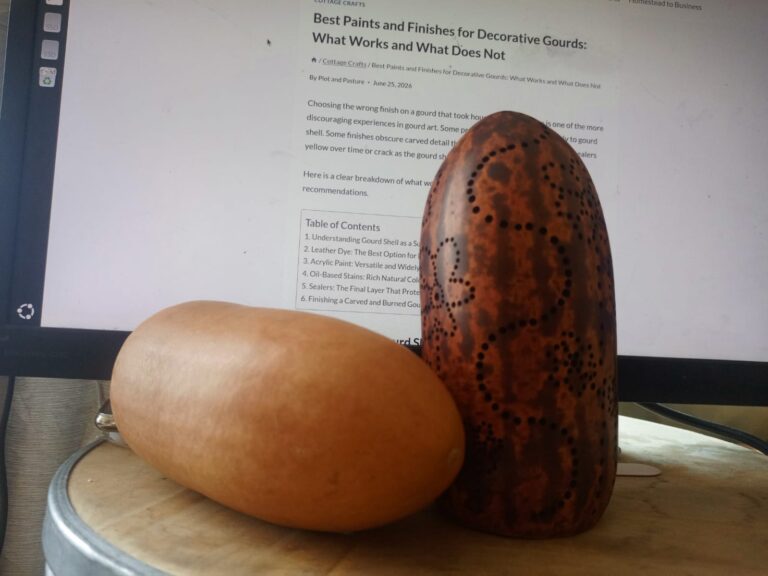
Exterior decoration using carved patterns, pyrography designs, or painted motifs that do not cover the entrance hole or ventilation holes creates a beautiful piece that is also genuinely functional. Light-colored paint or finishes on the exterior reflect heat better than dark colors, which matters for the thermal comfort of nesting birds.